
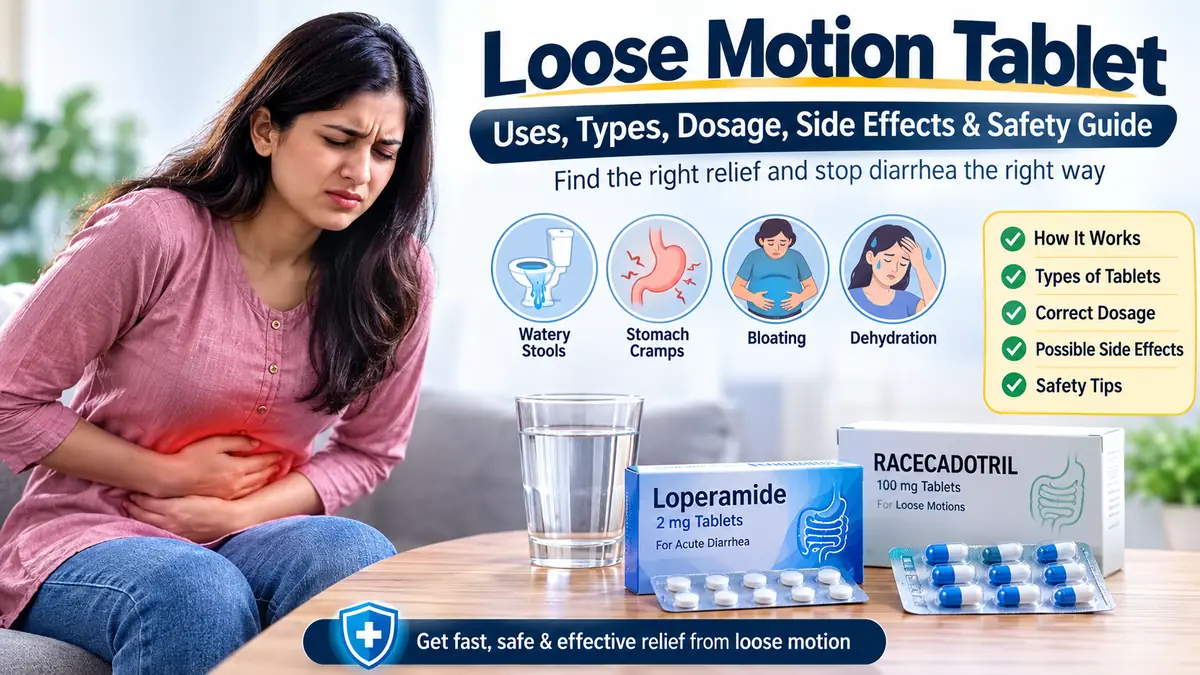

Loose motions can interrupt your day quickly, but reaching for a tablet is not always the first or safest step. Diarrhea causes the body to lose water and electrolytes, so preventing dehydration matters more than simply stopping bowel movements.
A loose motion tablet such as loperamide may provide short-term symptom relief for some adults with uncomplicated watery diarrhea. Bismuth subsalicylate is another option in some countries. However, oral rehydration solution (ORS) remains the foundation of treatment, and anti-diarrheal medicines should generally be avoided when there is bloody stool, significant fever, or another sign of invasive infection.
Quick takeaway: If you have ordinary short-term watery diarrhea, focus first on ORS and fluids. An adult may sometimes use an appropriate anti-diarrheal medicine for temporary relief, but the correct treatment depends on the cause and accompanying symptoms.
What Does “Loose Motion” Mean?
“Loose motion” is a commonly used term for diarrhea. Medically, diarrhea generally means passing loose or watery stools three or more times per day, or more frequently than is normal for you.
Diarrhea is not a disease by itself. It is a symptom that can result from several conditions, including:
- viral gastroenteritis
- bacterial or parasitic infections
- contaminated food or drinking water
- food poisoning
- food intolerance
- medication side effects
- irritable bowel syndrome (IBS)
- inflammatory bowel conditions
- recent antibiotic use
The World Health Organization (WHO) broadly describes three clinical patterns: acute watery diarrhea, acute bloody diarrhea (dysentery), and persistent diarrhea lasting 14 days or longer.
This distinction matters because a tablet that is reasonable for uncomplicated watery diarrhea may be inappropriate when diarrhea is bloody or associated with significant fever.
Which loose motion tablet Is Commonly Used?
There is no single tablet that is best for every episode of diarrhea. The appropriate choice depends on your age, symptoms, underlying health, recent medications and the likely cause.
For adults with uncomplicated acute diarrhea, two commonly discussed nonprescription medicines are loperamide and bismuth subsalicylate. NIDDK notes that these medicines can be used for acute diarrhea in many adults, while advising against routine OTC anti-diarrheal treatment for children and people with bloody stools or fever.
| Option | What it does | Typical role | Key limitation |
|---|---|---|---|
| ORS | Replaces water and electrolytes | First-line supportive treatment | Does not directly stop bowel movements |
| Loperamide | Slows intestinal movement | Short-term relief of watery diarrhea in suitable adults | Avoid in several infectious/inflammatory situations |
| Bismuth subsalicylate | Has anti-diarrheal and antisecretory effects | May reduce uncomplicated diarrhea | Not appropriate for everyone |
| Antibiotics | Treat certain bacterial infections | Only when clinically indicated | Not useful for most uncomplicated acute watery diarrhea |
| Probiotics | May influence intestinal microorganisms | Possible supportive role in selected cases | Benefits vary by strain and condition |
Medication availability, age restrictions, formulations and labeling vary between countries. Follow the instructions for the specific product supplied in your location and seek professional advice if you are unsure.
Loperamide for Loose Motion
Loperamide is one of the best-known medicines used for short-term diarrhea. Imodium is a widely recognized brand name, although generic versions are also available.
How does loperamide work?
Loperamide is an antimotility medicine. It slows movement through the intestine, allowing more water to be absorbed from intestinal contents. Stools consequently become less watery and bowel movements occur less frequently. The NHS reports that it often begins improving diarrhea within about an hour.
This is symptom control—it does not necessarily treat the underlying infection or other cause of diarrhea.
When can loperamide be considered?
According to Infectious Diseases Society of America (IDSA) guidance, loperamide may be considered in immunocompetent adults with acute watery diarrhea after adequate hydration. It should not replace fluid and electrolyte replacement.
It can be useful when frequent watery stools are particularly disruptive, provided there are no warning signs suggesting inflammatory or invasive diarrhea.
How long should you take it?
For self-treatment, loperamide should be used only for a short period and according to the product label. NHS guidance advises people not to continue self-treating short-term diarrhea with loperamide for more than 48 hours without speaking with a doctor.
Do not exceed the recommended dose. Excessive loperamide use can cause serious adverse effects.
When Should You NOT Take a loose motion tablet Like Loperamide?
Stopping intestinal movement can be undesirable when the body may be dealing with certain infections or inflammatory conditions.
Loperamide should generally be avoided or discussed with a healthcare professional if you have:
- blood in your stool
- significant fever with diarrhea
- severe diarrhea after taking antibiotics
- a swollen or distended abdomen
- an inflammatory bowel disease flare, such as ulcerative colitis
- diarrhea lasting longer than 48 hours without improvement
- severe or worsening abdominal symptoms
The NHS specifically warns against loperamide in circumstances including severe diarrhea following antibiotics, an ulcerative colitis flare, abdominal swelling, and bloody stool accompanied by a high temperature.
IDSA similarly recommends avoiding antimotility drugs when inflammatory diarrhea or diarrhea with fever raises concern about complications such as toxic megacolon.
That is why treating every case of loose motion with the same tablet is a poor approach.
ORS Is Often More Important Than the Tablet
When people search for the “best medicine” for diarrhea, they often focus on stopping the stools. Clinically, preventing dehydration is usually the more important objective.
Diarrhea removes both water and electrolytes from the body. Oral rehydration solution contains glucose and electrolytes in proportions designed to help replace those losses.
WHO recommends oral rehydration salts (ORS) as a key treatment for diarrhea. The solution replaces water and electrolytes lost through stool.
Why isn’t plain water always enough?
Water helps with fluid intake, but substantial diarrhea also causes losses of electrolytes such as sodium and potassium. ORS is specifically designed for rehydration rather than merely providing water.
This becomes especially important with frequent diarrhea, vomiting, hot weather, older age or other circumstances that increase dehydration risk.
Quick takeaway: A medicine that reduces stool frequency does not replace the water and electrolytes you have already lost. Continue appropriate fluid replacement even if an anti-diarrheal tablet makes you feel better.
Signs of Dehydration You Should Watch For
The most important complication of acute diarrhea is often dehydration rather than the number of trips to the bathroom.
Warning signs can include:
- unusual thirst
- dry mouth
- reduced urination
- dark urine
- weakness or fatigue
- dizziness or lightheadedness
- sunken eyes
- increasing sleepiness or confusion
- inability to keep fluids down
NHS guidance specifically identifies urinating less than usual and dark, strong-smelling urine as possible signs of dehydration.
Severe dehydration may require intravenous fluids, particularly when someone cannot adequately replace losses by drinking. WHO identifies IV fluids as treatment for severe dehydration or shock.
Bismuth Subsalicylate for Diarrhea
Bismuth subsalicylate, found in products such as Pepto-Bismol in some markets, is another OTC option for certain adults.
It works differently from loperamide and may help reduce diarrhea and some associated digestive symptoms. NIDDK lists both bismuth subsalicylate and loperamide among OTC medicines that may be used for acute diarrhea in adults.
Bismuth subsalicylate is not suitable for everyone. People with an aspirin or salicylate allergy, those taking certain medicines such as anticoagulants, pregnant people, and children or teenagers with particular viral illnesses may need to avoid it.
Because individual circumstances matter, check the product labeling and ask a pharmacist or doctor when medication interactions or contraindications are possible.
Do You Need an Antibiotic for Loose Motion?
Usually, no.
A common mistake is assuming that diarrhea automatically means a bacterial infection requiring antibiotics. Acute diarrhea can be viral, bacterial, parasitic, food-related or noninfectious.
For most people with acute watery diarrhea who have not recently traveled internationally, IDSA does not recommend empiric antibiotic treatment.
Antibiotics also do not work against viral gastroenteritis. NIDDK notes that doctors do not prescribe antibiotics to treat viral gastroenteritis because antibiotics have no effect on viral infections.
Antibiotics may be appropriate when a healthcare professional identifies or strongly suspects a particular bacterial infection where treatment provides a benefit.
Taking antibiotics unnecessarily can expose you to side effects and contributes to antimicrobial resistance. Some antibiotics themselves can also trigger diarrhea, including antibiotic-associated diarrhea involving Clostridioides difficile (C. difficile).
So antibiotics should not be treated as a routine loose motion tablet.
What About Metronidazole?
Metronidazole is sometimes casually used for diarrhea in countries where medicines are easily available without strict prescription controls. That does not make it a universal diarrhea treatment.
Metronidazole is an antimicrobial medicine used for particular infections. It is not an appropriate default treatment for every episode of watery diarrhea.
If diarrhea is uncomplicated and short-lived, supportive care and rehydration are often sufficient. When a parasite or another treatable organism is suspected, the appropriate medication should be selected according to the diagnosis and local clinical guidance.
Using metronidazole, ciprofloxacin, azithromycin or another antimicrobial simply because stools are loose can mean taking a drug that provides no benefit while exposing you to unnecessary risks.
What Causes Sudden Loose Motions?
Acute diarrhea frequently develops because something temporarily disrupts the gastrointestinal tract.
Viral gastroenteritis
Viruses are a common cause of acute gastroenteritis. Symptoms may include watery diarrhea, abdominal discomfort, nausea and vomiting.
Most otherwise healthy adults recover with supportive care and adequate hydration.
Food poisoning
Contaminated food can contain viruses, bacteria, parasites or toxins capable of causing diarrhea.
NIDDK identifies replacing lost fluids and electrolytes as the most important treatment for food poisoning.
Contaminated food and water
WHO notes that intestinal infections responsible for diarrhea may be caused by bacterial, viral or parasitic organisms and can spread through contaminated food, drinking water or person-to-person transmission associated with poor hygiene.
Food intolerance
Lactose intolerance and other food sensitivities can cause loose stools, gas and abdominal discomfort without an intestinal infection.
Medicines
Antibiotics are a familiar cause, but magnesium-containing products, some diabetes medicines and other drugs can also produce diarrhea.
IBS and digestive disorders
Recurring diarrhea may be related to irritable bowel syndrome (IBS). Persistent symptoms can also occur with inflammatory bowel disease, malabsorption and other gastrointestinal conditions.
Recurring diarrhea therefore deserves a different approach from a single short episode after a questionable meal.
What Should You Eat During Loose Motions?
You do not normally need to starve yourself until diarrhea completely stops.
When your appetite returns, NIDDK says most people can return to their normal diet even if some diarrhea remains. Children should generally continue their usual appropriate diet, while infants continue breast milk or formula.
Foods that are easy to tolerate can be useful while your stomach settles. Depending on personal tolerance, these may include:
- rice
- toast
- bananas
- potatoes
- crackers
- soup or broth
- other simple, familiar foods
Very fatty meals, excessive caffeine, alcohol and foods that clearly make symptoms worse are sensible to avoid temporarily.
Some people temporarily tolerate lactose poorly after gastroenteritis. If milk noticeably worsens diarrhea, reducing it for a short period may help, but unnecessary long-term food restrictions are generally not required.
Are Probiotics Helpful?
Probiotics contain live microorganisms intended to influence the intestinal microbial environment.
Research suggests that certain probiotics may help in some forms of diarrhea, but probiotics are not interchangeable. Effects depend on the specific microorganism, strain, dose, patient and cause of diarrhea.
NIDDK notes that some research suggests certain probiotics may shorten diarrhea, but their role in viral gastroenteritis continues to be studied.
They should therefore be viewed as a possible supportive measure—not a replacement for ORS or appropriate medical treatment.
Zinc and Loose Motion in Children
Treatment for children requires special care.
WHO recommends zinc supplementation for 10–14 days as part of childhood diarrhea management and reports that zinc can reduce the duration and severity of diarrheal episodes.
However, this does not mean adults should routinely take zinc tablets whenever they develop diarrhea.
More importantly, children should not simply be given an adult anti-diarrheal medicine. IDSA recommends against antimotility medicines such as loperamide in children and adolescents under 18 with acute diarrhea.
Guidance and product approvals differ by country, so a pediatrician, pharmacist or other qualified healthcare professional should guide medication use in children.
Can Children Take a loose motion tablet?
Parents should be particularly cautious with anti-diarrheal tablets.
A child’s treatment should focus heavily on preventing dehydration using appropriate fluids and oral rehydration solution. Infants should generally continue breastfeeding or formula feeding.
Do not assume that a smaller portion of an adult tablet is safe for a child.
Age restrictions differ among medicines, countries and clinical guidelines. For example, NHS consumer guidance says loperamide for children aged 11 or younger should only be given when prescribed, while IDSA’s infectious-diarrhea guideline recommends avoiding loperamide for acute diarrhea in those under 18.
The safest approach is to obtain professional advice rather than choosing a child’s dose from adult instructions.
When Does Loose Motion Need Medical Attention?
Most uncomplicated acute diarrhea improves without extensive treatment. Certain symptoms, however, change the situation.
Seek prompt medical assessment if diarrhea is accompanied by:
- blood or black, concerning stools
- significant or persistent fever
- severe abdominal or rectal pain
- repeated vomiting that prevents drinking
- marked abdominal swelling
- confusion, fainting or extreme weakness
- signs of significant dehydration
- very little or no urination
- rapidly worsening illness
You should also seek advice when diarrhea persists rather than improving, particularly if you have already used an OTC medicine for about 48 hours. NIDDK advises seeing a doctor when diarrhea worsens or continues for more than two days while taking an OTC treatment.
Persistent diarrhea lasting 14 days or longer is a separate clinical category and deserves evaluation rather than repeated self-treatment with anti-diarrheal tablets.
Older adults, pregnant people, young children and people with weakened immune systems or significant underlying medical conditions may need medical assessment earlier because dehydration or infection can become more serious.
Bloody Diarrhea Is Different From Ordinary Watery Diarrhea
Blood in the stool is one of the clearest reasons not to treat diarrhea as an ordinary stomach upset.
Bloody diarrhea can indicate dysentery or another inflammatory or invasive intestinal infection. WHO classifies acute bloody diarrhea separately from acute watery diarrhea.
Do not simply suppress these symptoms with loperamide.
NIDDK advises people with bloody diarrhea or fever not to use OTC anti-diarrheal medicines for suspected infectious gastroenteritis and instead to seek medical care.
The underlying cause may require investigation and targeted treatment.
When Might Stool Tests Be Needed?
A short episode of uncomplicated diarrhea usually does not require extensive testing.
NIDDK notes that when diarrhea has lasted less than seven days, doctors typically do not need to determine its exact cause unless other features suggest investigation is necessary. Longer-lasting illness or additional symptoms may lead to physical examination, medical history review and testing.
Depending on the clinical picture, a healthcare professional may consider:
- stool testing for bacterial pathogens
- parasite testing
- testing for C. difficile after relevant antibiotic exposure
- blood tests
- electrolyte assessment
- evaluation for inflammatory or malabsorption disorders
Testing becomes particularly relevant when symptoms are severe, persistent, recurrent, bloody or associated with unusual exposures.
How to Manage Acute Loose Motion Safely at Home
For an otherwise healthy adult with mild, short-term watery diarrhea and no warning signs, a practical approach is:
- Start replacing fluids immediately. Use ORS when fluid and electrolyte losses are significant.
- Drink regularly. Small, frequent amounts can be easier if nausea is present.
- Continue eating as tolerated. Choose foods that sit comfortably rather than fasting unnecessarily.
- Consider symptom relief carefully. An appropriate OTC medicine such as loperamide or bismuth subsalicylate may help some adults.
- Do not automatically take antibiotics. Most acute watery diarrhea does not require empiric antimicrobial treatment.
- Watch for warning signs. Blood, fever, dehydration, severe pain or worsening symptoms require a different approach.
- Reassess if it is not improving. Repeatedly suppressing diarrhea for days without determining the cause can delay appropriate treatment.
This approach addresses both comfort and the main physiological risk: loss of fluid and electrolytes.
How Can You Prevent Another Episode?
Many infectious diarrheal illnesses spread through contaminated food, water or hands.
Useful preventive measures include:
- washing hands thoroughly with soap
- using safe drinking water
- storing and preparing food hygienically
- cooking food properly
- preventing cross-contamination between raw and cooked foods
- using appropriate sanitation
- avoiding questionable food or water when traveling
WHO identifies safe drinking water, sanitation, handwashing with soap, good food hygiene and health education as important measures for reducing diarrheal disease.
For children, rotavirus vaccination is another major preventive measure against an important cause of severe gastroenteritis.
Choosing a loose motion tablet: The Bottom Line
A loose motion tablet can sometimes make acute diarrhea easier to manage, but stopping bowel movements is only one part of treatment.
For many adults with uncomplicated watery diarrhea, ORS and adequate fluid replacement come first. Loperamide can provide short-term symptom relief in suitable adults, while bismuth subsalicylate is another option for some people. Neither should distract from preventing dehydration.
Do not automatically use antibiotics or antimotility medicines for every case. Bloody stool, significant fever, severe pain, dehydration, abdominal swelling, persistent symptoms or serious illness warrant medical assessment.
The most useful question is therefore not simply, “Which tablet stops loose motion?” It is what is causing the diarrhea, how well hydrated you are, and whether any warning signs suggest that self-treatment is no longer appropriate.
