
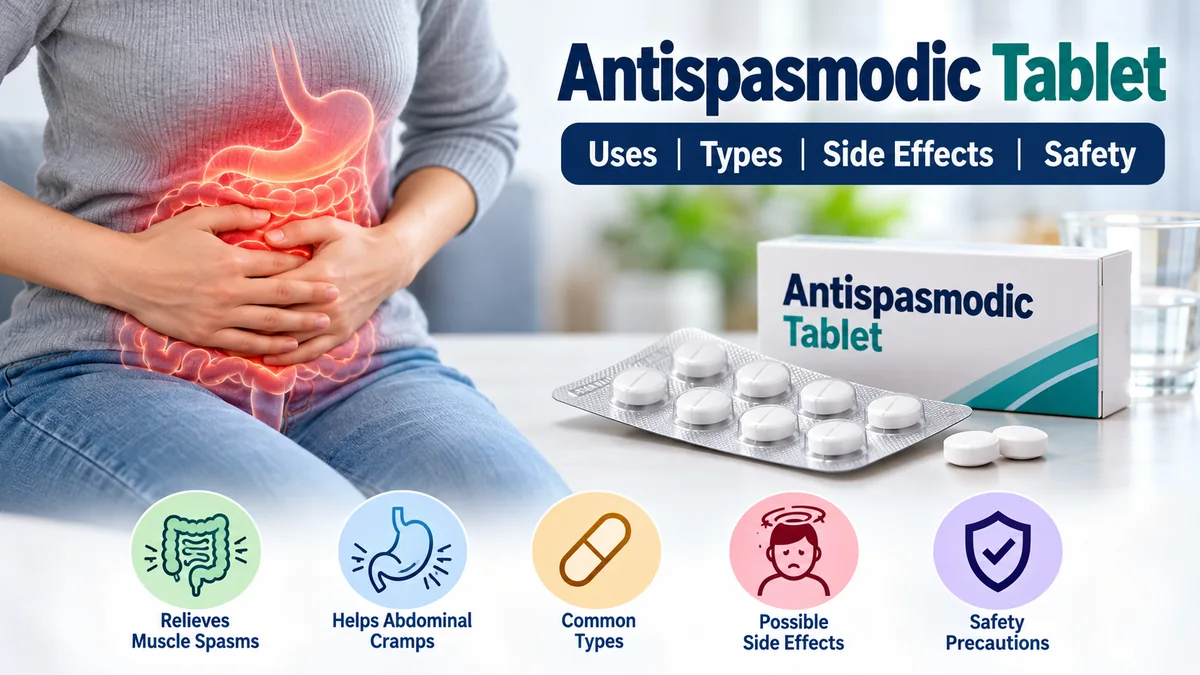

Stomach cramps can come on suddenly—after a meal, during an irritable bowel syndrome (IBS) flare, or alongside other digestive symptoms. An antispasmodic tablet is one type of medicine used to reduce certain painful muscle spasms, particularly those involving the gastrointestinal tract.
An antispasmodic tablet works by reducing involuntary muscle spasms or contractions. Depending on the active ingredient, it may relax smooth muscle directly or reduce nerve signals that trigger contractions. These medicines are commonly associated with abdominal cramping and IBS, although particular drugs have different approved uses, precautions, and side-effect profiles. NICE
What Is an Antispasmodic Tablet?
Antispasmodics are a group of medicines designed to reduce spasms—sudden, involuntary contractions of muscles.
In digestive conditions, the target is usually smooth muscle, the type of muscle found in organs such as the stomach and intestines. When these muscles contract strongly or irregularly, a person may experience cramping or abdominal pain.
Antispasmodic medicines are therefore different from ordinary painkillers. Rather than simply changing how pain is perceived, they may address the muscular contraction contributing to the discomfort.
For example, the American College of Gastroenterology describes dicyclomine and hyoscyamine as medicines that relax smooth muscle in the colon and reduce spastic contractions. IBS Treatment
The term antispasmodic tablet does not refer to one specific drug. Different active ingredients fall into this broad category, and they are not interchangeable.
What Is an Antispasmodic Tablet Used For?
One of the best-known uses of antispasmodic medicines is the treatment of abdominal cramping and pain associated with bowel spasms.
They may be considered for conditions or symptoms such as:
- abdominal or intestinal cramps
- irritable bowel syndrome
- painful gastrointestinal spasms
- certain bladder or urinary tract spasms, depending on the medicine
- abdominal cramping associated with some digestive disorders
NICE recommends that healthcare professionals consider antispasmodic agents for people with IBS, taken as required alongside appropriate dietary and lifestyle measures. NICE
Antispasmodics may also have roles outside IBS. For example, NICE advises considering an antispasmodic for abdominal cramping associated with diverticular disease. NICE
The indication depends heavily on the specific medicine. A tablet prescribed for one kind of spasm should not automatically be used for another.
Antispasmodic tablets for IBS
IBS is a common gastrointestinal disorder characterized by recurring abdominal pain associated with changes in bowel habits. Symptoms can include constipation, diarrhea, bloating, urgency, and cramping.
Antispasmodics are primarily used to address the pain and cramping component.
NIDDK lists antispasmodics among medicines that may help treat abdominal pain in people with IBS. Other treatments may be required when constipation or diarrhea is the predominant symptom. NIDDK
There is some nuance in the evidence. NICE recommends considering antispasmodics for IBS, whereas the American College of Gastroenterology notes that certain antispasmodics may provide short-term abdominal-pain relief but are not necessarily effective for overall IBS symptoms. NICE
That distinction matters: reducing a cramp is not the same as treating every aspect of IBS.
How Do Antispasmodic Tablets Work?
The gastrointestinal tract contains layers of smooth muscle that contract to move food and waste through the digestive system.
These contractions are normal.
Problems can arise when contractions become unusually strong, irregular, or painful. Antispasmodic medicines can reduce these contractions through different mechanisms.
Anticholinergic antispasmodics
Some antispasmodics have anticholinergic activity. They reduce the effects of acetylcholine, a neurotransmitter involved in stimulating smooth-muscle contraction.
Reducing this stimulation can relax gastrointestinal smooth muscle and decrease spasms.
This mechanism also explains several characteristic side effects, including dry mouth, blurred vision, and constipation.
Direct smooth-muscle relaxants
Other antispasmodics act more directly on smooth muscle rather than primarily blocking cholinergic nerve signaling.
The practical goal remains similar: decrease excessive contractions and relieve associated cramping.
Because mechanisms differ, two medicines described as antispasmodics may have substantially different contraindications, interactions, and adverse effects.
Common Types of Antispasmodic Medicines
Several medicines may be described as gastrointestinal antispasmodics. Availability and approved indications vary between countries.
| Medicine | General type | Common clinical role |
|---|---|---|
| Hyoscine butylbromide | Antimuscarinic/anticholinergic antispasmodic | Gastrointestinal cramps and spasms |
| Dicyclomine | Anticholinergic antispasmodic | Intestinal spasm and IBS-related pain |
| Hyoscyamine | Anticholinergic | Gastrointestinal smooth-muscle spasm |
| Mebeverine | Musculotropic antispasmodic | IBS-related intestinal spasms |
| Peppermint oil | Smooth-muscle relaxing treatment | IBS symptoms and abdominal discomfort |
These medicines should not be treated as equivalent simply because they share an antispasmodic effect.
Hyoscine butylbromide
Hyoscine butylbromide is a widely recognized antispasmodic.
Its patient information states that it is used to relieve cramps in muscles of the stomach, intestine and urinary system and can also be used to relieve IBS symptoms. Medicines.org.uk
Dicyclomine
Dicyclomine is another antispasmodic associated particularly with bowel spasms.
The American College of Gastroenterology identifies dicyclomine as an antispasmodic that relaxes smooth muscle in the colon, potentially reducing spastic contractions and abdominal pain. IBS Treatment
Hyoscyamine
Hyoscyamine also has anticholinergic properties and can reduce gastrointestinal smooth-muscle activity.
Like dicyclomine, it can produce anticholinergic effects such as dry mouth and blurred vision.
Peppermint oil
Peppermint oil occupies a somewhat different position. Enteric-coated peppermint oil capsules may be used for abdominal pain associated with IBS, and NIDDK lists coated peppermint oil among options that may help abdominal pain. NIDDK
“Natural,” however, does not automatically mean risk-free. Peppermint oil can cause adverse effects and is not appropriate for everyone.
How Quickly Does an Antispasmodic Tablet Work?
There is no universal onset time for an antispasmodic tablet.
The answer depends on:
- active ingredient
- formulation
- dose
- condition being treated
- severity of symptoms
- individual response
- whether food affects administration
Some medicines are intended for relatively rapid relief of spasmodic pain. The ACG’s IBS treatment resource, for example, states that benefit from dicyclomine or hyoscyamine may occur within a day. IBS Treatment
That does not mean every antispasmodic works within the same timeframe.
Follow the directions supplied with the specific product or prescription rather than applying instructions from one antispasmodic to another.
How Should an Antispasmodic Tablet Be Taken?
There is no single correct dose or schedule for the entire drug class.
Some antispasmodics are taken when symptoms occur, while others may be recommended at particular times depending on the medicine and diagnosis.
NICE advises that antispasmodics used for IBS can be taken as required alongside dietary and lifestyle measures. NICE
However, that guidance should not be interpreted as permission to self-select a dose.
Follow the product leaflet, pharmacist’s directions, or prescribing clinician’s instructions. Do not increase the amount simply because abdominal pain continues.
If a dose is missed, follow the instructions for that specific medicine rather than automatically doubling the next dose.
Common Antispasmodic Tablet Side Effects
Side effects depend on the active ingredient, but anticholinergic antispasmodics have several recognizable adverse effects.
They can include:
- dry mouth
- dizziness
- drowsiness
- blurred vision
- nausea
- constipation
The ACG lists dizziness, drowsiness, blurred vision, nausea, and dry mouth among common side effects associated with dicyclomine and hyoscyamine. IBS Treatment
Constipation deserves particular attention. NIDDK identifies anticholinergic and antispasmodic medicines among medications that can worsen constipation. NIDDK
This can create an awkward situation for someone with constipation-predominant IBS: a medicine may reduce cramping while potentially aggravating constipation.
Can an antispasmodic make you sleepy?
Some can.
Drowsiness and dizziness are associated with certain antispasmodic medicines. If a medicine causes these effects, activities requiring alertness—such as driving or operating machinery—may become unsafe.
Always check the leaflet for the exact medication.
Can an antispasmodic cause constipation?
Yes, some can.
This is particularly relevant to medicines with anticholinergic effects. People already experiencing constipation should discuss this with a healthcare professional when selecting treatment.
Who Should Be Careful With Antispasmodic Tablets?
Contraindications vary substantially between products, which is why knowing the active ingredient matters.
For example, the current patient information for hyoscine butylbromide lists conditions in which the medicine should not be taken, including glaucoma, myasthenia gravis, and suspected or confirmed bowel obstruction. Medicines.org.uk
Bowel obstruction is also an important consideration with other antispasmodics. The ACG notes that dicyclomine and hyoscyamine should not be given to people with a bowel blockage. IBS Treatment
Tell a doctor or pharmacist about existing medical conditions and all medicines being taken before starting a new antispasmodic.
Extra caution may be necessary in people with certain:
- eye conditions
- bowel disorders
- urinary problems
- neuromuscular conditions
- heart conditions
Pregnancy, breastfeeding, childhood, and older age can also affect whether a particular medicine is suitable.
Antispasmodic Tablet vs Painkiller: What Is the Difference?
These medicines address pain in different ways.
| Antispasmodic | Conventional painkiller |
|---|---|
| Targets muscle spasms or contractions | Primarily reduces pain perception or inflammatory pathways |
| Often used for cramping-type pain | Used for many types of pain |
| May affect gastrointestinal motility | Usually does not specifically relax bowel spasms |
| Effectiveness depends on whether spasm contributes to pain | Effectiveness depends on the cause and type of pain |
This distinction explains why an antispasmodic may help cramping but do little for abdominal pain caused by another problem.
It also explains why persistent abdominal pain should not simply be repeatedly suppressed with medication without determining its cause.
Antispasmodic Tablets and IBS Treatment
Medication is only one part of IBS management.
NICE recommends dietary and lifestyle measures alongside pharmacological treatment and advises that treatment choices should reflect the predominant symptoms. NICE
For example, treatment may differ when the main problem is:
Pain and cramping: an antispasmodic may be considered.
Diarrhea: an antimotility medicine such as loperamide may be appropriate in some cases.
Constipation: fibre adjustment, laxatives, or specific prescription medicines may be considered.
Persistent symptoms: further dietary management, including professionally supervised approaches such as a low-FODMAP diet, may be appropriate. NICE
This symptom-based approach is more useful than assuming one tablet can manage every IBS symptom.
Antispasmodic Tablet vs Antacid
Antispasmodics and antacids are also easily confused because both may be associated with stomach complaints.
They serve different purposes.
An antispasmodic reduces muscular spasms.
An antacid neutralizes stomach acid.
Cramping caused by intestinal contractions and burning caused by acid-related symptoms are therefore not necessarily treated with the same medicine.
If the nature of the symptom is unclear, choosing medication based simply on the location of the discomfort can lead to inappropriate treatment.
When Abdominal Cramps Need Medical Attention
A recurring cramp is not automatically IBS.
NICE stresses that people presenting with possible IBS should be assessed for warning signs that could indicate another condition and require further investigation. NICE
Seek prompt medical assessment when abdominal pain is severe, persistent, unexplained, or accompanied by concerning symptoms such as gastrointestinal bleeding, significant unexplained weight loss, persistent vomiting, marked abdominal swelling, or other signs of serious illness.
Sudden severe pain is particularly different from the familiar mild cramping someone may have experienced previously.
Repeatedly taking an antispasmodic can reduce symptoms without identifying their underlying cause.
Practical Tips for Using Antispasmodic Medicines Safely
A few habits can make treatment safer.
First, check the active ingredient, not only the brand name. Different brands may contain different medicines, while the same active ingredient can appear under multiple brand names.
Second, identify the type of pain. Cramping that comes in waves is different from persistent severe pain, burning discomfort, or sharply localized pain.
Third, monitor bowel habits. If constipation becomes noticeably worse after starting treatment, discuss it with a pharmacist or clinician rather than automatically continuing the medicine.
Fourth, pay attention to blurred vision, dizziness, or drowsiness. These effects can influence everyday activities.
Finally, avoid assuming that more medicine means better relief. Persistent symptoms are a reason to reconsider the diagnosis or treatment plan.
Does an Antispasmodic Tablet Cure the Underlying Condition?
Usually not.
An antispasmodic primarily provides symptom relief by reducing spasms. It does not necessarily eliminate whatever is causing those spasms.
This is especially clear with IBS. Management can involve diet, lifestyle changes, medicines and, in selected cases, psychological therapies or other interventions. NICE notes that treatment decisions should be based on the nature and severity of a person’s symptoms. NICE
The same principle applies to other causes of abdominal cramping.
Symptom relief can be valuable, but it should not be confused with curing an underlying gastrointestinal disorder.
The Bottom Line
An antispasmodic tablet is a medicine used to reduce involuntary muscle spasms, particularly painful contractions involving gastrointestinal smooth muscle. Depending on the active ingredient, these medicines may be used for IBS, abdominal cramping, intestinal spasms, or certain urinary-system spasms.
Different antispasmodics work differently and have different safety profiles. Dry mouth, dizziness, blurred vision, drowsiness, nausea, and constipation can occur with some commonly used medicines. Certain conditions—including bowel obstruction and, for some drugs, glaucoma or myasthenia gravis—can make treatment unsuitable. IBS Treatment
For occasional previously assessed cramping, follow the instructions for the specific medicine. For new, severe, persistent, or changing abdominal pain, seek medical advice rather than relying on repeated doses of an antispasmodic tablet.
