
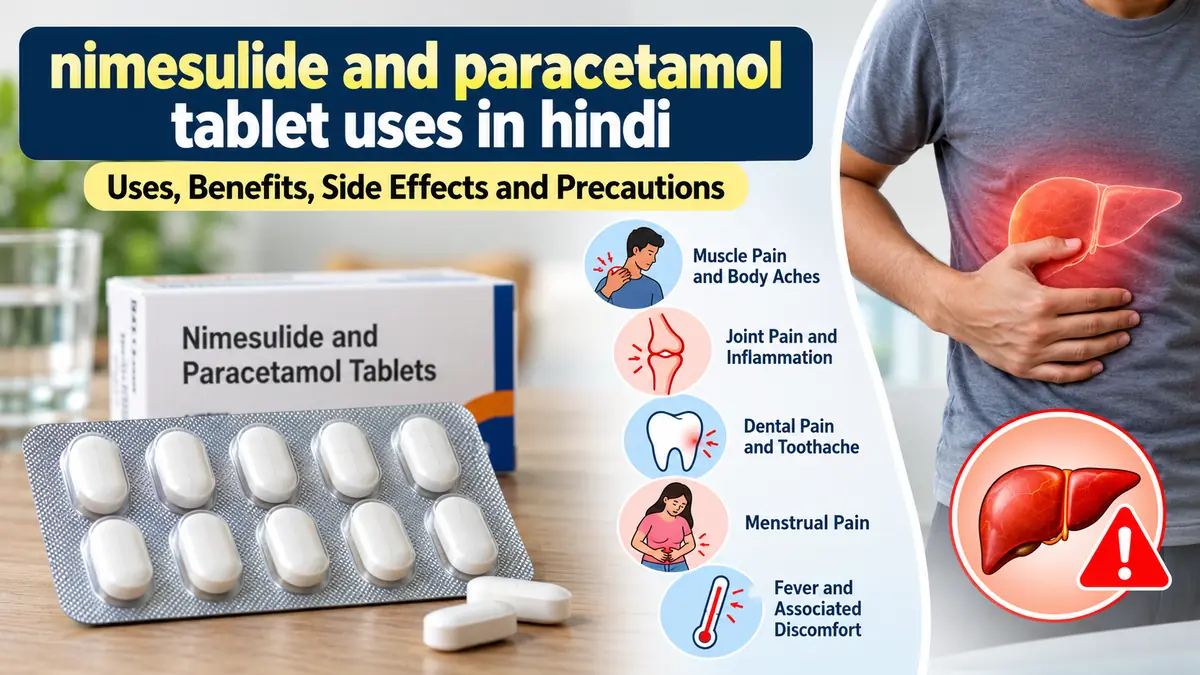

Nimesulide and paracetamol tablets are combination medicines used to relieve certain types of pain, inflammation, and fever. However, this combination carries important safety concerns, particularly the risk of liver damage. Understanding when it may be prescribed, who should avoid it, and what precautions matter can help prevent serious complications.
Nimesulide and paracetamol tablets combine two pain-relieving medicines. Nimesulide is a nonsteroidal anti-inflammatory drug (NSAID) that reduces pain and inflammation, while paracetamol helps relieve pain and lower fever. Although the combination may provide symptom relief, it is not suitable for everyone and should not be taken without appropriate medical advice.
What Is Nimesulide and Paracetamol Tablet?
A nimesulide and paracetamol tablet is a fixed-dose combination containing two active pharmaceutical ingredients with different mechanisms of action.
Nimesulide belongs to the NSAID family. It works primarily by inhibiting cyclooxygenase-related pathways involved in producing prostaglandins, which contribute to pain and inflammation.
Paracetamol, also called acetaminophen, is an analgesic and antipyretic. It helps reduce pain and fever but has relatively little peripheral anti-inflammatory activity.
The combination has been marketed in some countries for short-term symptomatic relief. However, availability and regulatory restrictions vary, and nimesulide has been associated with serious liver injury.
| Component | Main function | Important concern |
|---|---|---|
| Nimesulide | Reduces pain and inflammation | Liver injury, gastrointestinal bleeding, kidney problems |
| Paracetamol | Reduces pain and fever | Liver toxicity, particularly with excessive doses |
| Combination | Provides overlapping pain relief | Potential additive safety concerns, especially involving the liver |
The combination does not cure the underlying cause of an infection, inflammatory disease, or injury.
nimesulide and paracetamol tablet uses in hindi: Common Medical Uses
People searching for nimesulide and paracetamol tablet uses in hindi usually want to understand the conditions for which this medicine may be prescribed.
The combination has been used for short-term relief of painful conditions, but these uses should not be interpreted as recommendations for self-medication.
1. Muscle Pain and Body Aches
Muscle pain can occur after physical exertion, minor injuries, or certain illnesses.
Nimesulide reduces inflammatory pain, while paracetamol contributes additional analgesic activity.
A clinician may consider an appropriate pain-relieving medicine after assessing the cause of the symptoms. However, safer alternatives may be preferred because of nimesulide’s safety profile.
2. Joint Pain and Inflammation
Joint discomfort can result from sprains, arthritis, overuse, or other inflammatory conditions.
Nimesulide has anti-inflammatory properties that may temporarily reduce pain and swelling.
Nevertheless, the combination is not a long-term treatment for arthritis, and repeated use without medical supervision may increase the risk of adverse effects.
3. Dental Pain and Toothache
Dental pain may develop because of tooth decay, gum inflammation, or dental procedures.
Pain-relieving medicines can reduce discomfort temporarily, but they do not treat cavities, dental abscesses, or other underlying dental problems.
Persistent toothache, facial swelling, or fever requires dental assessment.
4. Menstrual Pain
Nimesulide has been used for primary dysmenorrhea, a condition involving painful menstrual cramps.
Prostaglandins contribute to uterine contractions and menstrual pain. NSAIDs can reduce prostaglandin production and therefore relieve cramps.
However, the nimesulide-paracetamol combination is not generally a preferred first-line option, particularly when safer, established treatments are available.
5. Pain Following Minor Injuries
Inflammatory pain can occur following sprains, strains, and soft-tissue injuries.
A clinician may recommend short-term pain relief alongside appropriate measures such as rest, rehabilitation, and gradual return to activity.
Severe swelling, deformity, inability to bear weight, or persistent pain warrants medical evaluation.
6. Fever and Associated Discomfort
Paracetamol is widely used to reduce fever, but the presence of nimesulide makes this combination less appropriate for routine fever management.
Nimesulide-containing medicines should not be used as a routine treatment for fever or flu-like illnesses. In particular, European restrictions identify fever and flu-like symptoms as contraindications to nimesulide use.
People experiencing fever should seek advice about an appropriate single-ingredient fever reducer rather than automatically choosing this combination.
How Does Nimesulide and Paracetamol Work?
The two medicines affect pain-related pathways differently.
Nimesulide Mechanism of Action
Nimesulide inhibits prostaglandin synthesis through cyclooxygenase pathways, with relative preference for COX-2 activity.
Prostaglandins contribute to inflammation, swelling, and pain sensitivity.
By reducing their production, nimesulide can decrease inflammatory discomfort.
Paracetamol Mechanism of Action
Paracetamol primarily acts through mechanisms involving the central nervous system, although its exact analgesic mechanism is not fully established.
It can reduce pain perception and influence the body’s temperature-regulating processes.
Unlike typical NSAIDs, paracetamol provides limited anti-inflammatory effects in peripheral tissues.
Does Combining Them Make Pain Relief Better?
Combining analgesics with different mechanisms can sometimes improve symptom control. However, that does not establish that this particular fixed-dose combination is safer or clinically preferable to suitable single-ingredient alternatives.
Both substances have liver-related safety concerns. Their combined use therefore requires careful consideration of the patient’s health, other medicines, and potential risks.
nimesulide and paracetamol tablet uses in hindi: Dosage and Administration
The appropriate dosage depends on the specific formulation, the patient’s age, medical history, and the regulatory status of the product.
Some formulations have historically contained nimesulide 100 mg with paracetamol 325 mg or 500 mg. These strengths are examples of previously evaluated products, not recommended doses. India’s drug regulators have raised concerns about the therapeutic justification and safety of these combinations.
CDSCO
+1
How Should the Medicine Be Taken?
If a legally available formulation has been specifically prescribed by a qualified clinician:
- Follow the exact instructions provided by the prescriber.
- Do not increase the dose or frequency independently.
- Avoid taking additional paracetamol-containing medicines.
- Do not combine it with other NSAIDs unless explicitly directed.
- Inform the prescriber about existing liver, kidney, or stomach conditions.
The European Medicines Agency restricts systemic nimesulide to second-line treatment for certain painful conditions, with treatment lasting no longer than 15 days. This is a maximum restriction, not a recommended treatment duration for the combination.
European Medicines Agency (EMA)
What Happens If You Miss a Dose?
Do not take a double dose to compensate for a missed tablet. Ask your pharmacist or prescriber how to proceed based on the prescribed schedule.
If you accidentally take more than the prescribed amount, seek medical advice promptly, even if you initially feel well. Paracetamol overdose can cause delayed, life-threatening liver injury.
Side Effects of Nimesulide and Paracetamol Tablets
Like other medicines, this combination can cause unwanted effects. Some are relatively mild, while others require urgent medical attention.
Commonly Reported Side Effects
Potential side effects include:
- Nausea and vomiting
- Abdominal discomfort
- Indigestion or heartburn
- Diarrhea
- Dizziness
- Skin rash or itching
Not everyone experiences these reactions, and their frequency varies depending on the formulation and patient characteristics.
Serious Side Effects
More concerning adverse effects include liver injury, gastrointestinal bleeding, kidney dysfunction, and severe allergic reactions.
| Warning sign | Possible concern | Recommended action |
|---|---|---|
| Yellow skin or eyes | Liver injury | Stop taking the medicine and seek urgent medical evaluation |
| Dark urine with unusual fatigue | Possible liver dysfunction | Seek prompt medical assessment |
| Black, tarry stools | Gastrointestinal bleeding | Seek emergency medical care |
| Vomiting blood | Stomach or intestinal bleeding | Seek emergency medical care |
| Reduced urination or significant swelling | Kidney dysfunction | Seek urgent medical evaluation |
| Difficulty breathing or facial swelling | Severe allergic reaction | Seek emergency medical care |
Can Nimesulide and Paracetamol Damage the Liver?
Yes. This is one of the most significant concerns associated with the combination.
Nimesulide has been linked to rare but serious liver injury, including cases of acute liver failure requiring transplantation. Paracetamol can also cause severe liver damage, particularly when taken in excessive amounts.
The European Medicines Agency reviewed nimesulide specifically because of reports of serious hepatic adverse reactions.
European Medicines Agency (EMA)
Avoid alcohol while using medicines that may affect liver function, and do not combine multiple painkillers without professional guidance.
Who Should Avoid Nimesulide and Paracetamol?
This combination is unsuitable for certain groups because the risks may outweigh potential benefits.
People With Liver Disease
Individuals with hepatitis, cirrhosis, previous drug-induced liver injury, or other significant hepatic conditions should avoid nimesulide.
A history of liver problems is especially relevant because both components may contribute to liver-related complications.
Children and Adolescents
Nimesulide should not be given to children under 12 years of age under European restrictions. Pediatric restrictions also exist in India.
Parents should never use adult nimesulide-paracetamol tablets to treat a child’s fever or pain without appropriate medical advice.
Pregnant or Breastfeeding Women
Nimesulide is contraindicated during the third trimester of pregnancy, and it is generally avoided during pregnancy because of NSAID-related fetal risks.
It should also be avoided during breastfeeding unless a qualified healthcare professional determines that a specific treatment is appropriate.
Paracetamol alone may be considered in certain circumstances, but that does not make the combination safe.
People With Kidney Disease or Stomach Ulcers
NSAIDs can reduce blood flow to the kidneys and may worsen existing renal impairment.
They can also increase the risk of gastrointestinal irritation, ulcers, and bleeding.
People with chronic kidney disease, active peptic ulcers, or previous gastrointestinal bleeding require particular caution.
People Taking Other Medicines
Important potential interactions include those involving:
- Warfarin and other anticoagulants
- Aspirin and other NSAIDs
- Corticosteroids
- Certain antidepressants, including SSRIs
- Diuretics and some blood pressure medicines
- Methotrexate
- Other medicines containing paracetamol
A pharmacist or clinician should review the complete medication list before any combination treatment is considered.
Is Nimesulide and Paracetamol Tablet Banned in India?
India has introduced specific restrictions on nimesulide-containing medicines and fixed-dose combinations.
A June 2, 2023 government notification prohibited the manufacture for sale, sale, and distribution for human use of nimesulide + paracetamol dispersible tablets. The expert committee concluded that the formulation lacked adequate therapeutic justification and could pose risks to patients.
CDSCO
India’s Central Drugs Standard Control Organisation (CDSCO) also maintains regulatory notifications concerning other fixed-dose combinations. A December 2025 notification addressed immediate-release oral nimesulide formulations above 100 mg.
CDSCO
+1
It is essential to distinguish between different dosage forms and formulations. A prohibition on dispersible tablets should not automatically be described as a prohibition on every possible nimesulide-paracetamol formulation.
Patients should verify the exact product and its current legal status with a licensed pharmacist or appropriate regulatory authority.
Nimesulide and Paracetamol vs Paracetamol Alone
Although both treatments can relieve pain, they are not interchangeable in terms of safety.
| Feature | Nimesulide + Paracetamol | Paracetamol alone |
|---|---|---|
| Pain relief | Yes | Yes |
| Fever reduction | Contains an antipyretic, but nimesulide is inappropriate for routine fever treatment | Commonly used for fever |
| Anti-inflammatory action | Nimesulide provides anti-inflammatory activity | Minimal peripheral anti-inflammatory action |
| Liver concerns | Significant, including nimesulide-associated injury | Primarily associated with overdose and certain risk factors |
| Stomach bleeding risk | Increased because of the NSAID component | Generally lower at recommended doses |
| Routine self-medication | Not recommended | May be appropriate when used according to the label |
For ordinary fever or mild pain, paracetamol alone is often a more appropriate option for eligible patients. However, it must still be taken correctly.
The NHS specifically warns against taking paracetamol simultaneously with other products containing the same ingredient because accidental overdose can be dangerous.
nhs.uk
Safer Alternatives for Pain and Fever
The best treatment depends on the underlying cause, the severity of symptoms, and the patient’s health conditions.
Paracetamol for Fever and Mild Pain
Single-ingredient paracetamol is commonly used for headaches, minor body aches, and fever.
It generally causes less stomach irritation than NSAIDs, although excessive doses can cause severe liver injury.
Ibuprofen for Inflammatory Pain
Ibuprofen is another NSAID that may help relieve inflammation-related pain.
However, it is not suitable for everyone, particularly people with certain kidney conditions, gastrointestinal bleeding risks, cardiovascular problems, or pregnancy-related restrictions.
Non-Medicine Approaches
Some mild painful conditions respond to supportive measures such as rest, appropriate cold or warm compresses, hydration, and physical rehabilitation.
Persistent pain should not simply be masked with repeated medication. Identifying the cause is more important than continually suppressing symptoms.
Important Precautions Before Taking This Combination
Before using any medicine containing nimesulide, consider the following safety measures.
- Confirm the exact ingredients. Read the product label and check the strengths of both medicines.
- Check the product’s regulatory status. Restrictions differ by country and formulation.
- Review existing medical conditions. Liver disease, kidney impairment, gastrointestinal ulcers, and bleeding disorders can significantly affect safety.
- Avoid duplicate painkillers. Cold remedies and other prescription products may already contain paracetamol or an NSAID.
- Watch for warning symptoms. Yellowing of the eyes, severe abdominal pain, black stools, or reduced urination require urgent assessment.
- Avoid prolonged use. Nimesulide is not intended for chronic, unsupervised pain management.
People with fever accompanied by persistent vomiting, dehydration, breathing difficulties, severe headache, or worsening symptoms should seek medical evaluation rather than relying on combination painkillers.
When Should You Consult a Doctor?
Seek medical advice if pain lasts several days, repeatedly returns, interferes with daily activities, or is accompanied by swelling, weakness, or unexplained fever.
Urgent medical attention is necessary for severe allergic symptoms, signs of gastrointestinal bleeding, suspected overdose, or possible liver injury.
If you have already taken a nimesulide-paracetamol tablet, do not assume that serious harm will occur. However, avoid taking further doses until a qualified healthcare professional has reviewed the product and your circumstances.
Final Thoughts on nimesulide and paracetamol tablet uses in hindi
Understanding nimesulide and paracetamol tablet uses in hindi involves more than knowing that the medicine can relieve pain and inflammation.
Nimesulide has recognized analgesic and anti-inflammatory effects, while paracetamol reduces pain and fever. However, combining them introduces important safety concerns, especially regarding liver toxicity, and certain formulations have been prohibited in India.
For routine headaches, fever, dental pain, muscle aches, or joint discomfort, the safest approach is to identify the cause and select an appropriate treatment with professional guidance. Do not self-medicate with nimesulide-paracetamol combinations or use them for prolonged periods.
Medical disclaimer: This article is intended for general educational purposes and does not replace individualized medical advice, diagnosis, or treatment.
